
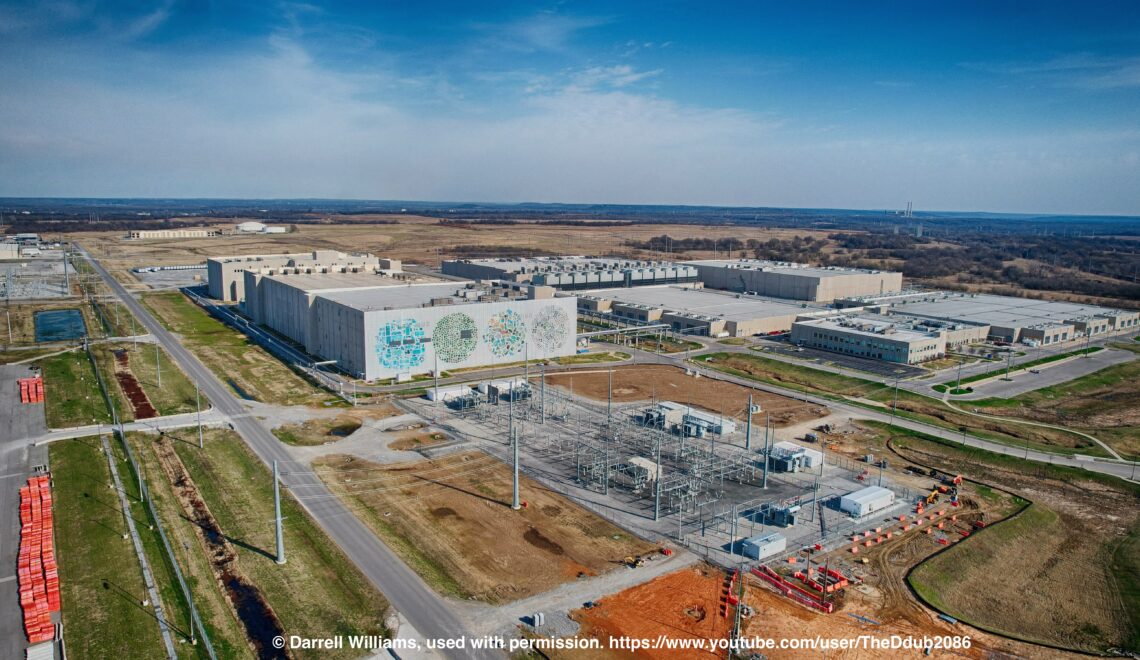
Q: We are watching the growing controversy over the huge data centers popping up around the country. There are conversations, and rebuttals, everywhere. One example we saw was a video opposing a data center that showed brown water coming out of a kitchen tap. Beyond the rhetoric, what are the economic benefits of these data centers?
A: The economic pitch you hear at a county council meeting is real. It is also built to be seen from one angle, and the other angle matters just as much.
Start with what is true. A single large project can generate thousands of construction jobs and billions in economic output while it is being built; one Ohio study put a mid-sized data center project at nearly 9,700 construction jobs and $2.4 billion in total output. Property tax revenue is real too, since a data center is appraised far higher than the farmland or warehouse it replaces. Loudoun County, Virginia expects almost $795 million this year alone from data center equipment taxes.
Here is what rarely makes the brochure. Most of those jobs are construction-phase, not permanent. Georgia’s own 2026 state economic outlook, while calling the investment undeniable, cautioned that long-term employment and the broader ripple effect “may be much smaller than imagined.” Research out of Brookings backs that up: wages for existing and new workers rise a modest 3 to 4 percent near these facilities, with no measurable effect on home prices. A Georgia Tech study found the spillover benefits concentrate almost entirely in metro counties with existing skilled labor markets; rural counties, which is where many of these projects actually get sited for cheap land and water access, saw no measurable employment gain at all.
The tax revenue number also needs a second look. Georgia handed out nearly half a billion dollars in tax breaks to land its data center projects. Nationally, the states that actually disclose the figure have given roughly $6 billion in sales tax exemptions over five years, and 21 states do not report their totals publicly at all. A revenue number without the incentive number next to it is not the whole transaction.
Then there is the cost nobody puts in the economic impact study handed to your county commissioners: your own electric bill. Residential electricity rates rose roughly 32 percent nationally between 2020 and 2025. In the mid-Atlantic PJM grid region alone, power supply costs jumped from $2.2 billion to $14.7 billion in a single year, with data centers driving nearly two-thirds of that increase. That cost lands on the same household being told the new facility is a community win.
None of this means the benefits are fake. It means they are real, uneven, and easy to overstate when only one side is doing the math. If a project is proposed near you, ask three things: are the jobs figures construction-phase or permanent operations, what is the net tax benefit after incentives, and has anyone modeled the effect on your own electric rate. Those three answers tell you more than any ribbon-cutting speech.