
Q: There are 3 approaches to valuing a piece of land: the income approach, the comparable approach, and the cost approach. I have a plot of 8 feet by 19 feet. I don’t have time to take a course in real estate valuation. What will be the price if I sell this plot?
A: None of the three approaches you named will get you a usable number, and it’s worth explaining why, because the reason points straight at the real answer.
The income approach fails because a plot that size, about 150 square feet, can’t generate rent or support any productive use on its own. The comparable approach fails because there’s no real market of similar tiny parcels selling regularly enough to set a price per square foot. And the cost approach falls apart too, since it’s built around materials and construction costs that don’t apply to raw, unbuildable land.
A plot this small only has value to one type of buyer, an adjacent property owner. Real estate professionals have names for slivers like this. A “boundary line adjustment” is the formal, cooperative version, often used to correct old surveying errors or clean up an encroaching fence or driveway. A “spite strip” or “ransom strip” is the less friendly version, a narrow piece of land that blocks access to something and forces whoever needs it to negotiate, sometimes for years.
Either way, the price isn’t set by a formula. It’s set by how badly one specific neighbor needs that strip, and nothing else.
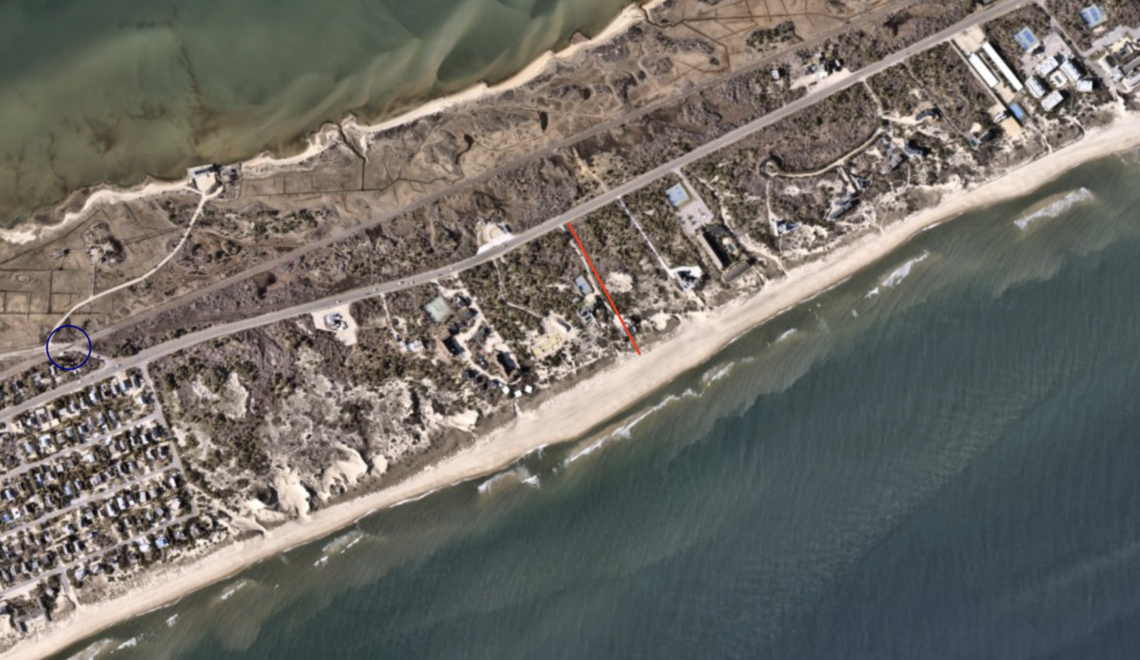
The best illustration I’ve found of this is a 2013 story out of the Hamptons. Suffolk County discovered it owned a strip of land 1,900 feet long and exactly 1 foot wide, running between a public highway and the ocean, wedged between two private estates. The county planned to auction it off for $10. Instead, a bidding war broke out between the two neighboring property owners, and the winning bid came in at $120,000. Here’s a link to the news story on NBC.
That result tells you two things at once. First, it shows how badly a government agency can misjudge value when it treats land as a commodity instead of asking who actually needs it. Second, and this is the disclaimer worth stating plainly: the Hamptons are not typical American real estate. That stretch of Long Island is lined with waterfront estates worth many millions of dollars, and the two bidders were, by all accounts, financially in a position to treat $120,000 as a rounding error to settle a property dispute. A similar strip behind a modest home in the Midwest might sell for a few hundred dollars, or simply get handed over for the cost of a survey and a handshake.
So back to the original question. Don’t spend time or money on a formal appraisal for an 8′ by 19′ plot. Instead, figure out who borders it, and ask yourself honestly what it’s worth to them specifically, access, a fence line, a driveway, a zoning fix. That conversation, not a valuation formula, is where the real number lives.