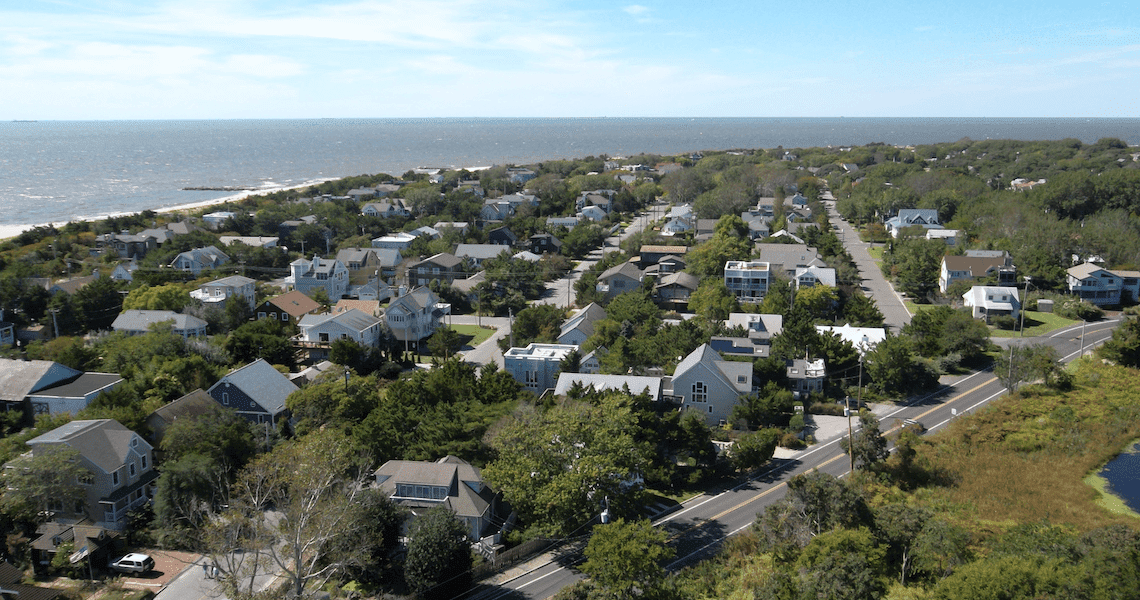
Q: We own and live in a home located on a 30-acre parcel near a small Midwest city that has zero vacant lots remaining. The city is popular for many reasons — including a fiscally conservative school district and a beautiful setting overlooking one of the Great Lakes. Please share what you know about creating a subdivision.
A: You may be sitting on one of the most valuable pieces of real estate in your region — and that fact alone makes you a target. Before you talk to a developer, a real estate agent, or even a neighbor with an opinion, you need to understand the process well enough to protect yourself. Thirty acres near a supply-constrained city with a desirable school district and a Great Lakes view is not a casual real estate decision. It is a major financial and life event that deserves the same deliberate preparation you would give any significant business undertaking.
Start with one question before all others: do you want to develop this land yourself, or sell it to someone who will? The answer determines everything that follows — your timeline, your risk, your profit, and your day-to-day involvement for the next several years. There is no universally right answer. A landowner who develops independently can capture the full margin between raw land value and finished lot value. A landowner who sells to a developer captures a fraction of that margin but walks away clean, with no further obligations, no carrying costs, and no sleepless nights. Both are legitimate paths. Neither should be chosen without fully understanding what the other costs you.
Before you answer that question honestly, answer these first. What is your age? If you are a senior, are you healthy? What have you done for a living? What is your current financial situation? These are not intrusive questions — they are the foundation of every sound decision that follows. A 35-year-old entrepreneur with capital reserves and a healthy tolerance for risk faces a completely different set of options than a 68-year-old retiree living on a fixed income. Business ownership experience builds risk tolerance, negotiating instinct, and the practical ability to manage professionals, contractors, and timelines simultaneously. A person whose life savings are at stake in a development project inhabits a different emotional reality than someone investing discretionary capital. Know yourself before you commit to a path — because the path is long and the costs of changing direction midway are steep.
Step one is a feasibility study, not a phone call to an agent.
Before anyone puts a number on your land, you need to know what the land can actually become. That requires a civil engineer and a municipal planning conversation — in that order. The engineer will assess what the land can physically support: how many lots, what size, where the roads must go, where utilities can realistically reach, and what the topography permits or prevents. The planning department will tell you what current zoning allows, what variances or rezoning may be required, and what the approval process looks like in your specific municipality.
These two conversations are relatively inexpensive and will tell you more than any agent ever could. Do not skip them and do not reverse the order. An agent’s opinion of your land’s value before these conversations is a guess dressed as expertise — and in a supply-constrained market with a Great Lakes view, that guess will almost always flatter you in ways that serve their interests, not yours.
The school district and the view are your pricing power — protect them accordingly.
Developers already know about the school district. They already know about the view. They have done their homework long before they pick up the phone to call you. The moment you casually mention those attributes in an early conversation, you signal awareness without precision — and precision is everything in a negotiation. Know the developed value of your land before you discuss it with anyone who has a financial interest in buying it from you or listing it for you. That knowledge is the only reliable protection a landowner has.
Next week: the approvals process, the professional team you need, and the one mistake that kills more subdivision projects than any other.